
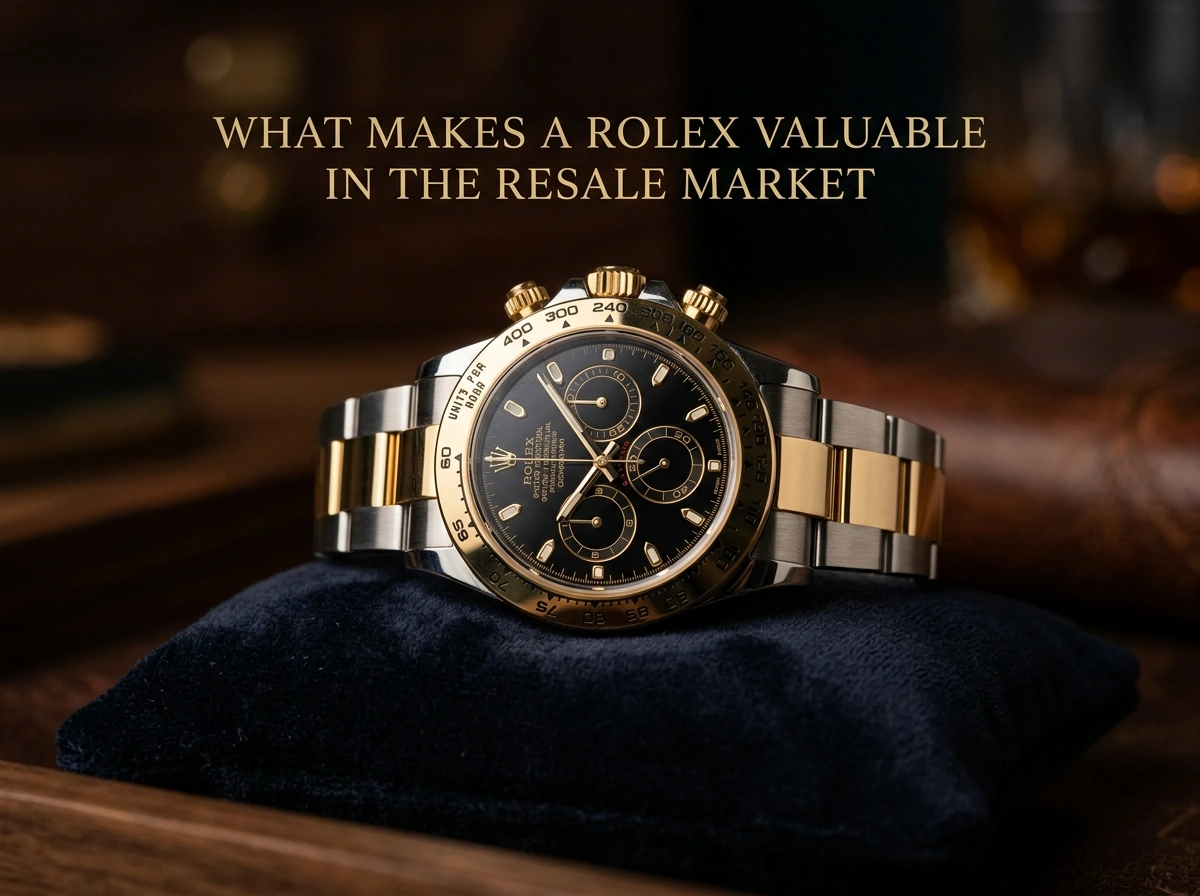
A Rolex is more than a timepiece. For many owners, it doubles as a store of value that can hold or even grow its worth over time. But not every Rolex commands a premium on the secondary market. Some models trade for less than their original retail price, while others sell for multiples of it.
Understanding the difference matters whether you plan to buy, sell, or simply hold. In this guide, you’ll learn the key factors that shape a Rolex’s resale value and how collectors and dealers assess each one. By the end, you’ll know what to look for before making your next decision.
Brand Prestige and Reputation
Rolex sits at the top of the luxury watch hierarchy, and that position underpins everything else. Decades of consistent quality, precision engineering, and disciplined marketing have built a brand that buyers trust worldwide.
This reputation creates steady demand. When a name is universally recognized and respected, resale becomes easier and prices stay firm. A watch from a lesser-known maker may need a buyer who appreciates the brand. A Rolex, by contrast, has a ready audience in nearly every market.
Prestige also protects against sharp value drops. While trends shift, the core appeal of owning a Rolex rarely fades. That stability is one reason the brand consistently outperforms many rivals on the secondary market.
Rarity and Limited Availability
Scarcity drives price. When supply is tight and demand is high, values climb. Rolex produces certain references in limited numbers, discontinues popular models, or simply cannot meet demand at retail.
Several factors create rarity:
- Discontinued references that are no longer made
- Short production runs with unusual dials or features
- Models with long waitlists at authorized dealers
- Vintage pieces that have survived in small numbers
A discontinued reference often gains value precisely because new buyers cannot get it from the brand directly. The harder a watch is to find, the more collectors are willing to pay to own one.
Model Demand and Popularity
Not all Rolex models hold equal appeal. Some references attract intense interest, while others see modest demand. The most sought-after sports models, in particular, often trade well above retail.
Demand reflects design, cultural relevance, and collector preference. A watch tied to a memorable history or a distinctive look tends to draw consistent buyers. Popularity can also shift over time as tastes evolve and new collectors enter the market.
Before buying with resale in mind, research which references currently command strong interest. A model with broad, lasting appeal will be far easier to sell at a fair price later.
Condition and Originality
Condition has a direct effect on value. A watch kept in excellent shape, with minimal wear and original parts, will outperform a comparable piece that has been heavily worn or modified.
Why Original Parts Matter
Collectors prize originality. A dial, bezel, hands, and bracelet that match the watch’s production period add credibility and value. Replaced or aftermarket components, even if functional, can lower the price significantly.
Common Condition Pitfalls
Watch out for these issues that reduce resale value:
- Deep scratches or dents on the case
- Faded or refinished dials when originality is expected
- Non-original parts swapped in during repairs
- Over-polishing that removes the case’s sharp edges
A well-preserved watch with crisp lines and original details signals careful ownership. That impression alone can justify a higher asking price.
Provenance and Service History
Provenance refers to a watch’s documented history of ownership and care. A clear record builds buyer confidence and supports a stronger price.
The most valuable supporting documents include the original box, warranty card, receipts, and service records. Together, these are often called a “full set,” and they reassure buyers that the watch is genuine and well maintained.
Service history matters too. A watch serviced by Rolex or a reputable specialist demonstrates that it has been cared for properly. Buyers pay more for a piece they know is mechanically sound and free of hidden problems.
Materials and Construction
The materials in a Rolex influence both its appeal and its baseline value. Precious metals carry intrinsic worth, while specific finishes and components affect desirability.
Common material tiers include:
- Stainless steel – durable and widely popular, often in high demand
- Two-tone – a mix of steel and gold for a balanced look
- Solid gold – higher intrinsic value and a luxurious feel
- Platinum – the rarest and most premium option
Interestingly, steel sports models can sometimes outsell gold versions on the secondary market because demand outpaces supply. Material alone does not set the final price, but it forms part of the overall equation.
Age and Vintage Appeal
Age cuts both ways. A modern watch in pristine condition appeals to buyers who want reliability and current features. A vintage piece, however, can carry historical charm that newer models cannot replicate.
Vintage Rolex watches with original patina, rare dial variations, or notable references often command strong prices. Their appeal lies in scarcity and character built over decades.
That said, age only adds value when paired with originality and condition. A worn-out vintage watch with replaced parts will struggle, while a well-kept example from the same era can become highly desirable.
Market Trends and Timing
The watch market moves like any other. Prices rise and fall with collector sentiment, economic conditions, and shifts in fashion. Timing your sale can make a meaningful difference.
Some references stay stable for years, while others experience sudden surges in interest. Staying informed about current trends helps you decide when to buy or sell. Following auction results, dealer pricing, and collector communities gives you a clearer view of where the market stands.
While no one can predict trends perfectly, understanding the broader cycle helps you avoid selling at a low point or overpaying during a peak.
Authenticity and Verification
Authenticity is non-negotiable. A confirmed genuine Rolex holds value; a questionable one does not. The market is also flooded with imitations, and some are sophisticated enough to fool casual buyers.
The replica space has grown so advanced that even a so-called super clone rolex can mimic genuine details closely, which is exactly why professional verification matters before any high-value purchase. Always insist on authentication from a trusted expert or authorized service center.
Verified authenticity protects both buyer and seller. It supports the asking price, removes doubt, and keeps the transaction credible. Without it, even a genuine watch may struggle to sell at full value.
Conclusion
A Rolex earns its resale value through a combination of factors working together. Brand prestige, rarity, model demand, condition, provenance, materials, age, market timing, and verified authenticity all play a part. No single element guarantees a strong price, but together they shape what a watch is truly worth.
If you plan to buy or sell, start by researching current demand for the specific reference you have in mind. Then gather documentation, confirm authenticity, and assess condition honestly. With that foundation, you’ll be well positioned to make a smart decision and protect the value of your watch for years to come.
