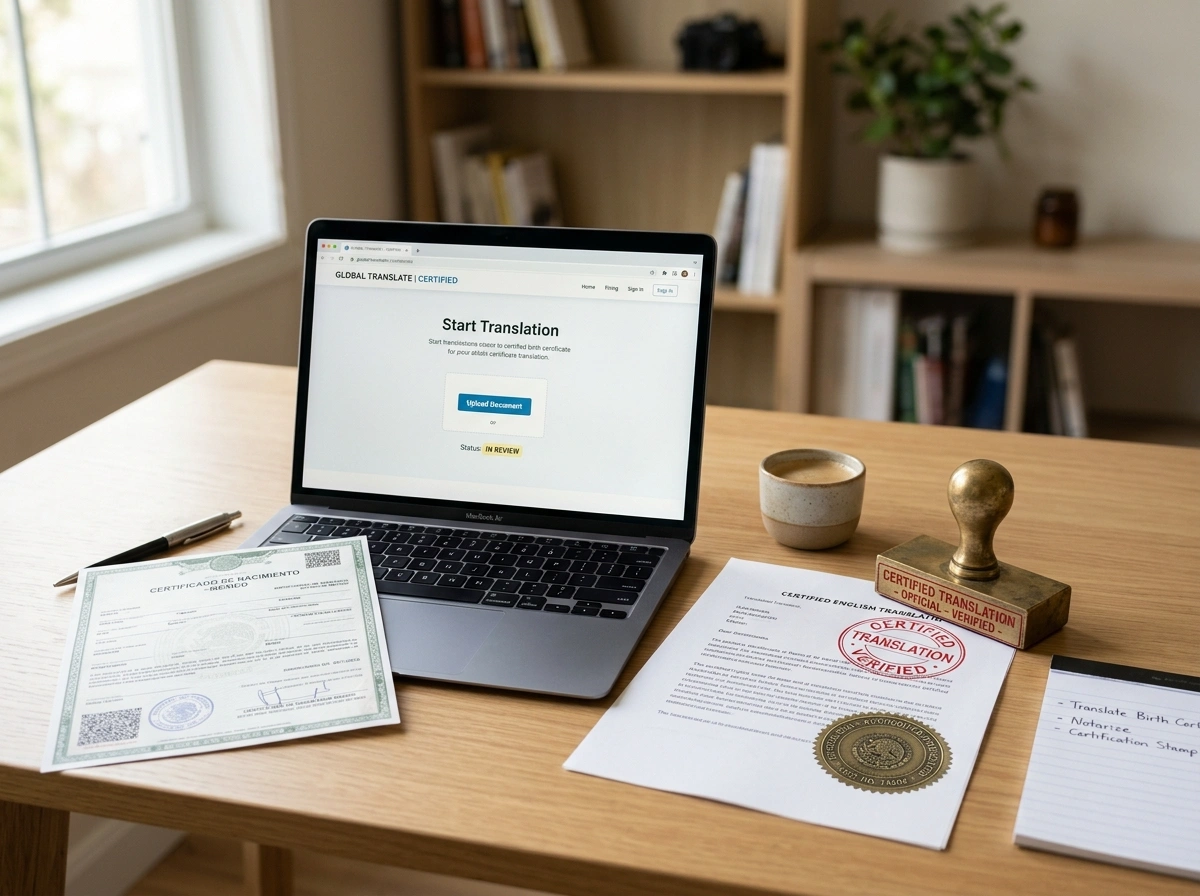
Navigating the immigration process, applying for a visa, or enrolling in a foreign university can feel overwhelming. One of the very first hurdles you will encounter is gathering and preparing your official paperwork. If your vital records are in a language other than the official language of the country you are applying to, you cannot simply hand them over. You must provide a certified translation.
A birth certificate is the most fundamental document proving your identity, age, and nationality. Government agencies, academic institutions, and legal courts demand absolute accuracy when processing these records. A simple mistake in translating a name, date, or location can cause severe delays or even result in an outright rejection of your application.
This comprehensive guide will explain everything you need to know about translating your vital records. You will learn why certified translations are mandatory, how to locate reliable professionals in your area, and the exact steps required to get your documents translated quickly and accurately.
Understanding the Need for Certified Translation
When dealing with government agencies like the United States Citizenship and Immigration Services (USCIS), a standard translation is never enough. You cannot ask a bilingual friend to translate the document, nor can you rely on automated software. Authorities require a certified translation to ensure the text is accurate and complete.
A certified translation includes a signed statement from the translator or the translation agency. This statement, often called a Certificate of Accuracy, attests that the translation is a true and correct representation of the original document. It also confirms that the translator is competent to translate from the source language into the target language.
Different organizations have specific rules regarding these certifications. For example, USCIS requires the certification to include the translator’s signature, date, and contact information. Universities might require the translation to be notarized, adding an extra layer of legal verification. Understanding the specific requirements of the institution receiving your document is critical to avoiding application delays.
How to Find a Translation Service Near You
Locating a trustworthy translation agency requires a bit of research. You want a provider that is experienced, recognized by official organizations, and capable of meeting your deadlines.
Start by searching online for specialized agencies. Many highly reputable translation services operate entirely online, allowing you to upload a digital copy of your document and receive the certified translation via email or standard mail. This is often much faster and more affordable than visiting a physical office. If you prefer working with an agency in your immediate area, you can easily find a birth certificate translation near me by looking for companies that explicitly state they follow USCIS guidelines.
When evaluating potential services, look for memberships in professional organizations like the American Translators Association (ATA). Membership indicates a commitment to professional standards and ethics. Additionally, read customer reviews to gauge the company’s reliability and customer service. Pay attention to turnaround times and pricing structures, as standard rates often hover around $29.95 per page, with options for expedited delivery if you are facing a tight deadline.
Step-by-Step Guide to Getting Started
Getting your vital records translated does not have to be a complicated ordeal. By following a clear process, you can ensure your documents are handled properly from start to finish.
1. Determine Your Specific Requirements
Before contacting a translator, check the exact requirements of the institution requesting your document. Ask if they need a simple certified translation, a notarized translation, or an apostille. Determine if they require physical copies mailed to them or if digital PDF copies are acceptable. Knowing these details upfront will save you time and money.
2. Prepare Your Document
You rarely need to hand over your original, physical birth certificate. Most translation agencies work from digital copies. Scan your document or take a high-quality photograph using your smartphone. Ensure all text, stamps, signatures, and seals are clearly visible. If the edges are cut off or the text is blurry, the translator may ask for a better copy, which can delay the process.
3. Request a Quote and Timeline
Submit your clear, legible document to your chosen translation service for a quote. Reputable agencies provide transparent pricing based on the page count or word count. A standard page usually consists of about 250 words. Confirm the turnaround time during this step. Standard processing typically takes 24 to 48 hours, but many agencies offer expedited same-day services for an additional fee.
4. Review the Translated Document
Once the translation is complete, the agency will usually send you a draft for review. Check the spelling of all proper nouns, including your name, your parents’ names, and the city of birth. Names should match your passport and other official documents exactly. If your document contains challenging handwriting, double-check that those sections were interpreted correctly. Approve the draft only when you are completely satisfied.
Key Requirements and Documentation
To ensure a smooth translation process, you must be aware of additional documentation and formatting requirements that might apply to your situation.
First, consider notarization. A notarized translation includes a signature from a Notary Public, who verifies the identity of the person signing the Certificate of Accuracy. While USCIS no longer strictly requires notarization for immigration documents, many universities, local courts, and financial institutions still do. Expect to pay a small additional fee, usually around $19.95, for notarization services.
Second, if you are submitting your translated birth certificate to a foreign government, you might need an apostille. An apostille is a specialized certificate issued by a government authority that authenticates the document for use in countries participating in the Hague Convention. This process is more complex and expensive, sometimes costing upwards of $150, but it is entirely necessary for international legal matters.
Finally, be prepared to deal with handwritten text. Older birth certificates often contain cursive handwriting that is difficult to read. Translation agencies may charge a premium for documents with significant amounts of illegible handwriting, as they require extra time and expertise to decipher.
Benefits of Professional Translation Services
Entrusting your vital records to a professional agency offers numerous advantages over attempting a DIY approach.
The most significant benefit is guaranteed acceptance. Established agencies know exactly what USCIS, local courts, and international universities look for in a certified translation. They format the document correctly, attach the proper certification letters, and ensure the terminology is legally accurate. This completely eliminates the anxiety of having your application returned due to formatting errors.
Another major advantage is data security. Birth certificates contain highly sensitive personal information. Reputable professional translation services utilize secure servers and strict privacy protocols to protect your data from identity theft. Free online translation tools offer no such protections and often store your inputted text on public servers.
Professional services also offer unmatched speed and convenience. Language experts can turn around a flawless document in a matter of hours. They have teams of translators covering dozens of languages, meaning you can get your documents processed quickly regardless of where you were born.
Frequently Asked Questions
Do I need to send my original birth certificate to the translator?
No, you almost never need to send your original physical document. A clear, high-resolution scan or photograph is sufficient for a certified translation. You should keep your original document safe, as you will likely need to present it during official interviews.
How much does a certified translation usually cost?
Pricing varies by agency, but standard certified translations typically start at around $29.95 per page (up to 250 words). Additional services like notarization, expedited turnaround, or handling difficult handwriting will increase the total cost.
Can I translate my own birth certificate if I am fully bilingual?
No. Government agencies like USCIS explicitly forbid applicants from translating their own documents. The translation must be completed by a competent, unbiased third party who provides a signed certificate of accuracy.
Take the Next Step Toward Your Translation
Failing to secure a proper, certified translation of your vital records is a common roadblock in immigration and academic applications. Fortunately, it is entirely preventable. By understanding the specific requirements of the institution you are applying to and partnering with a reputable, professional translation service, you can move forward with confidence.
Gather your documents, check them for clarity, and reach out to a certified professional today. With the paperwork handled correctly the first time, you can focus on the more important aspects of your upcoming journey.
