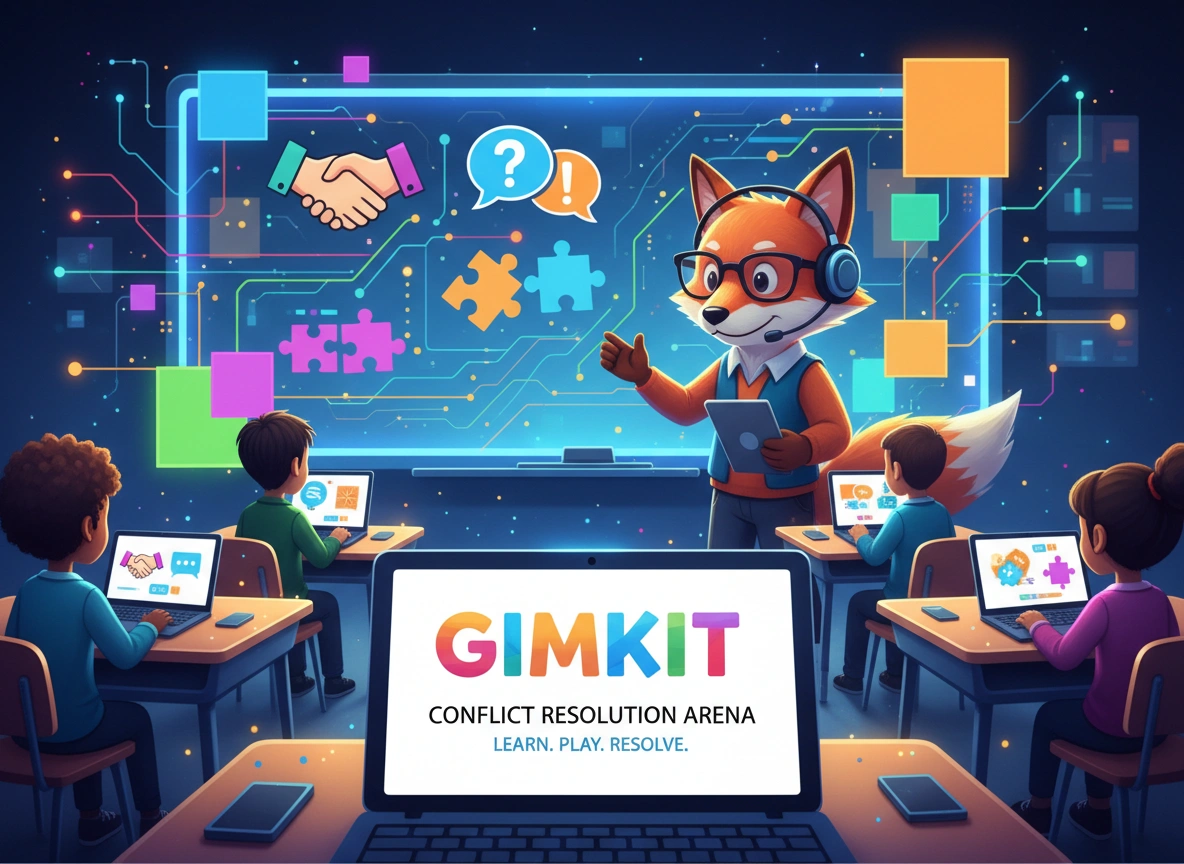
Classroom conflict is inevitable. Students argue over shared resources, misunderstand each other’s intentions, or struggle to navigate group dynamics. While traditional lectures on “using your words” have their place, they often fail to engage students where they live: in a world of interactive, fast-paced digital experiences. This is where gamification enters the picture, specifically through Gimkit.
Gimkit is often pigeonholed as a simple quiz tool for reviewing vocabulary or math facts. However, its versatile game modes offer a powerful framework for teaching soft skills like conflict resolution. By leveraging its mechanics, educators can simulate high-pressure scenarios that require negotiation, teamwork, and strategic communication to succeed.
This guide explores how to transform Gimkit from a review tool into a dynamic platform for social-emotional learning (SEL). We will cover specific strategies to design activities that foster empathy, improve communication, and teach students how to resolve conflicts constructively.
Understanding Gimkit Beyond the Quiz
Created by a high school student, Gimkit looks like a standard quiz game on the surface. Students answer questions on their own devices to earn in-game cash. They use this cash to buy upgrades and power-ups that help them or hinder their opponents.
The “hinder” mechanic is where the magic happens for conflict resolution. In standard modes, players can “ice” opponents (preventing them from answering questions for a short time) or steal earnings. In collaborative modes like “Trust No One” (similar to Among Us) or “The Floor is Lava,” cooperation is essential for survival.
These mechanics mimic real-world friction. When a student gets “iced” by a classmate, they feel a flash of frustration. When a team fails because one member didn’t contribute, resentment builds. These are safe, controlled micro-conflicts. They provide the perfect teachable moments to discuss how we react to unfairness, how we communicate frustration, and how we work together despite challenges.
Strategy 1: The “Sabotage” Simulation
Focus: Managing Frustration and Reactive Emotions
One of the hardest parts of conflict resolution is managing the initial emotional spike when something goes wrong. You can use Gimkit’s competitive modes to simulate this in a low-stakes environment.
The Setup
Create a “Kit” (a question set) on a neutral topic the students know well, like pop culture or general trivia. The content doesn’t matter; the mechanics do. Set the game mode to “Classic” or “Tag” and explicitly encourage the use of power-ups that negatively affect others.
The Activity
Before playing, set the ground rule: “Observe your feelings.”
- Play Phase: Let the chaos ensue. Students will freeze each other, steal money, and subtract points.
- Pause Phase: Stop the game halfway through. Ask students to rate their frustration level on a scale of 1-10.
- Resolution Phase: Resume the game, but introduce a new rule. Before using a negative power-up on someone, they must pay a compliment or ask a polite question.
The Lesson
This activity teaches emotional regulation. Students experience the direct link between aggressive actions (sabotage) and the emotional climate of the room. The debrief is crucial here. Ask questions like: “How did it feel when you were targeted?” and “Did the game become more or less fun when everyone was aggressive?” This mirrors real-world conflicts where retaliation often escalates the problem.
Strategy 2: Collaborative Problem-Solving with “The Floor is Lava”
Focus: Teamwork and Resource Allocation
Conflict often arises from scarcity—not enough time, not enough materials, or not enough attention. Gimkit’s cooperative mode, “The Floor is Lava,” requires the entire class to work together to keep the game going. They must earn enough money collectively to build bridges and stay above the rising lava.
The Setup
Use a Kit related to your current curriculum (e.g., historical events or science terms). Select “The Floor is Lava” mode.
The Activity
This mode inherently creates tension. Some students will earn money faster than others. Some might spend money on selfish upgrades rather than the collective bridge.
- Silent Round: Play the first round with a strict “no talking” rule. They must coordinate purely through gameplay. This usually leads to failure and frustration.
- Strategy Session: Give the class 5 minutes to discuss a strategy. Who will focus on earning? Who is responsible for building? How will they decide when to spend?
- Communication Round: Play again, allowing full verbal communication.
The Lesson
The contrast between the silent round and the communication round highlights the importance of clear communication in resolving potential conflicts. The conflict here is “us vs. the game.” If they don’t resolve internal disagreements about resource allocation (who spends the money), the whole class fails. This teaches negotiation and the value of a shared goal in overcoming interpersonal friction.
Strategy 3: Role-Playing with “Trust No One”
Focus: Identifying Deception and Restoring Trust
“Trust No One” is a hidden identity mode inspired by social deduction games. Some students are Crewmates trying to complete tasks (answer questions), while one or two are Impostors trying to sabotage the mission without getting caught.
The Setup
Prepare a Kit on “Conflict Resolution Scenarios.” Instead of academic questions, use situational prompts.
- Question: “You see two friends arguing over a seat. What do you do?”
- Answers: “Yell at them,” “Ignore it,” “Offer to find another chair,” “Pick a side.”
Correct answers should be the positive conflict resolution strategies.
The Activity
As students play, the Impostors will try to blend in while sabotaging the investigation. The Crewmates must discuss who looks suspicious. This naturally leads to accusations and defense—a form of conflict.
The Lesson
This mode is a laboratory for “I statements” and evidence-based arguments.
- Bad Conflict Resolution: “It’s him! I know it! He’s lying!” (Accusatory, aggressive).
- Good Conflict Resolution: “I noticed Sarah didn’t answer any questions during the last investigation, which makes me concerned she might be the Impostor.” (Observation-based).
After the game, discuss how it felt to be falsely accused. This builds empathy for those who are misunderstood in real conflicts. It teaches students to look for evidence rather than jumping to conclusions based on bias or emotion.
The Benefits of Gamified Conflict Resolution
Why use Gimkit instead of a worksheet? The benefits lie in the experiential nature of the learning.
1. Lowered Defenses
When students sit in a circle to talk about feelings, their walls go up. It feels awkward and performative. When they are playing a game, their focus is on winning. Their reactions are authentic. This allows you to address real behaviors in real-time, rather than hypothetical ones.
2. Immediate Feedback Loops
In a lecture, a student might not realize that their aggressive tone is unhelpful. In Gimkit, if a team argues constantly and fails to coordinate, the “Game Over” screen provides immediate, objective feedback that their method didn’t work.
3. Safe Failure
Resolving conflict takes practice. Failing to resolve a conflict in the playground can mean a ruined friendship or a trip to the principal’s office. Failing to resolve a conflict in Gimkit just means you lose virtual money. It provides a psychological safety net that encourages students to try new strategies.
Actionable Tips for Implementation
To successfully use Gimkit for SEL and conflict resolution, follow these implementation tips:
Debriefing is Mandatory
The game itself is just the stimulus; the learning happens in the reflection. Never end the class immediately after the game. Reserve at least 10-15 minutes for discussion. Use prompts like:
- “What was the most frustrating moment of the game?”
- “How did your team decide who would buy the upgrades?”
- “Did anyone feel unheard during the strategy session?”
Curate Your Kits Carefully
Don’t rely solely on pre-made Kits. Create your own custom Kits that include questions specifically about social scenarios. This reinforces the vocabulary of conflict resolution (e.g., “compromise,” “mediation,” “active listening”) while they play.
Rotate Roles
In cooperative modes, assign specific roles to students who might struggle with them. Give a quiet student the role of “Captain” who makes the final decision on spending. Give a dominant student the role of “Observer” who can only offer advice but not touch the controls. This forces them to practice communication skills outside their comfort zone.
Model Healthy Competition
Participate in the game yourself occasionally. Model how to lose gracefully. If you get “iced” or sabotaged, narrate your internal process aloud: “Wow, I feel frustrated that I got frozen right before I could answer, but I know it’s just part of the game. I’ll catch up next round.”
By repurposing Gimkit’s mechanics, you transform a simple review app into a sophisticated simulator for human interaction. You provide students with a sandbox where they can grapple with frustration, practice negotiation, and learn that the best way to win—in games and in life—is often by working together.
Please visit website for more info
