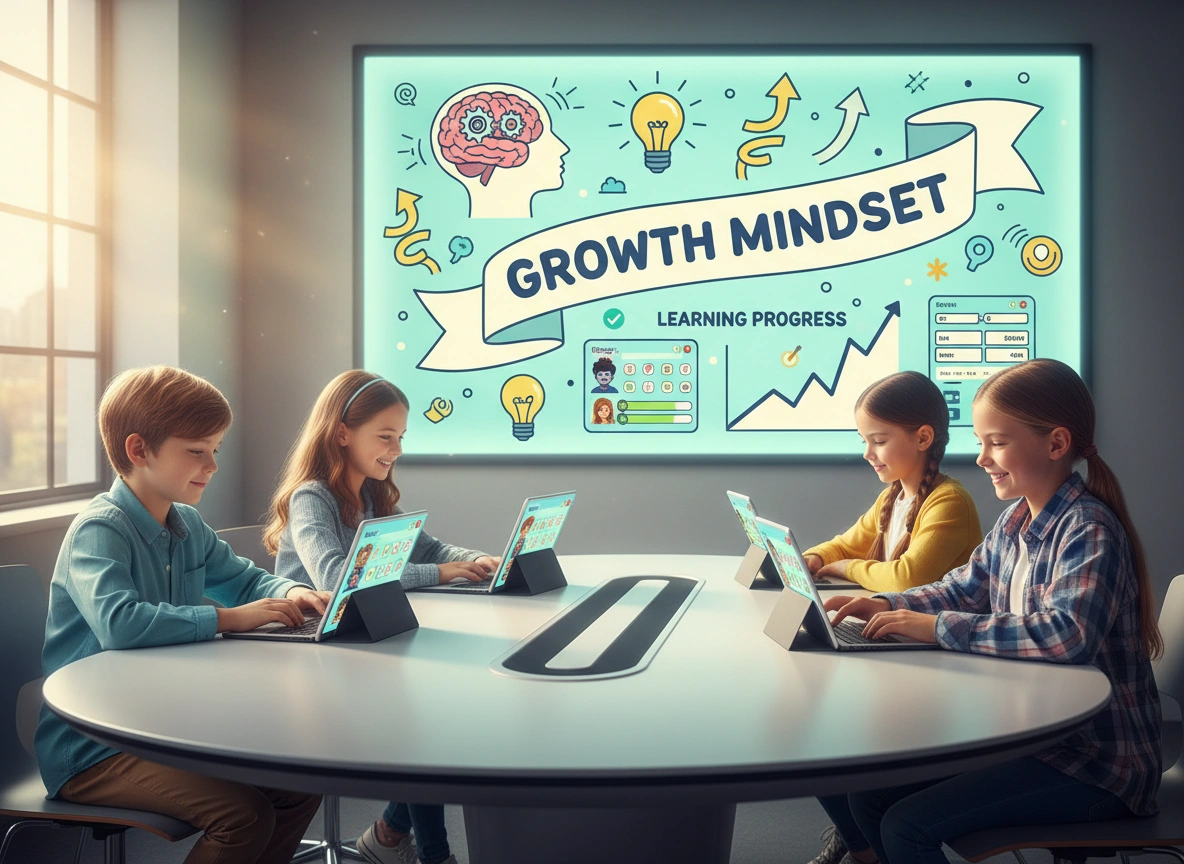
For decades, educators have searched for the magic formula that transforms a student who says “I can’t do this” into one who says “I can’t do this yet.” This shift in perspective, coined by psychologist Carol Dweck as a “growth mindset,” is fundamental to academic success. It is the belief that intelligence and abilities can be developed through dedication and hard work. While theory is one thing, practical application in the classroom is another. This is where Quizizz, a popular gamified learning platform, has emerged as a powerful ally for teachers.
Quizizz is more than just a tool for administering tests; it is an environment that fundamentally changes how students perceive failure and success. By leveraging instant feedback, low-stakes practice environments, and gamification, the platform encourages students to embrace challenges rather than fear them.
The Psychology of Gamified Learning
Traditional testing often induces anxiety. The red pen, the silence of the exam room, and the finality of a grade can trigger a “fixed mindset”—the belief that one’s ability is static and defined by a single performance. Quizizz disrupts this model by introducing game mechanics that normalize the learning process.
When students engage with a Quizizz session, they aren’t just taking a test; they are playing a game. The inclusion of avatars, power-ups, and leaderboards shifts the focus from “being judged” to “leveling up.” This subtle psychological shift is crucial. In a game, losing a life or failing a level isn’t a permanent judgment of character or intelligence; it’s simply a signal to try a different strategy.
Reducing the Fear of Failure
One of the biggest barriers to a growth mindset is the fear of failure. When students are afraid to be wrong, they stop taking risks. They stick to what they know, avoiding difficult problems to protect their self-image.
Quizizz lowers the stakes. The platform’s “Redemption Question” feature is a prime example of growth mindset in action. If a student answers a question incorrectly, they are often given a second chance later in the game to answer it again. This mechanic explicitly teaches that mistakes are not final. They are temporary setbacks that can be corrected with focus and effort. By allowing students to redeem themselves within the same session, Quizizz reinforces the idea that improvement is always possible.
The Power of Instant Feedback
In a traditional classroom setting, feedback can be slow. A student might turn in a worksheet on Tuesday and not get it back until Friday. By then, the learning moment has passed, and the student may have already internalized incorrect information.
Quizizz provides immediate feedback. As soon as a student selects an answer, they know if they were right or wrong. More importantly, the platform can be configured to show the correct answer and an explanation immediately.
Turning “I Don’t Know” into “Now I Know”
This instant loop is vital for developing a growth mindset because it connects effort directly to understanding. When a student sees they missed a question, reads the explanation, and understands why they missed it, the error becomes a learning tool rather than a failure.
Consider a math student struggling with algebraic equations. On a paper test, a series of wrong answers might lead to a failing grade and a feeling of incompetence. On Quizizz, that same student might get the first two questions wrong, read the instant feedback, adjust their approach, and get the next three right. That micro-trajectory of improvement builds confidence. It proves to the student that they are capable of learning in real-time.
Personalized Learning Paths and Adaptability
A core component of a growth mindset is understanding that everyone learns at different speeds and in different ways. A “one-size-fits-all” lesson plan can inadvertently foster a fixed mindset by making slower learners feel inadequate or faster learners feel bored.
Quizizz supports differentiation through its asynchronous “Homework” or “Independent Practice” modes. Teachers can assign quizzes that students complete at their own pace. This removes the pressure of the ticking clock that paralyzes so many students.
Taking Ownership of Learning
Furthermore, Quizizz offers features that allow for adaptive learning. Teachers can create question banks where students receive a random set of questions, or use the “Paper Mode” to gauge understanding without devices.
When students control the pace, they take ownership of their learning journey. A student who needs to spend three minutes on a complex physics problem can do so without feeling rushed by peers who finish in thirty seconds. This autonomy builds resilience. Students learn to stick with a problem until they solve it, rather than giving up because they aren’t keeping pace with the class average.
Data-Driven Reflection for Students
We often talk about data for teachers, but data is equally powerful for students. Quizizz provides detailed reports not just to the instructor, but to the participant. After a session, students can review their performance, seeing exactly which topics they mastered and where they struggled.
This transparency encourages self-reflection, a key habit of lifelong learners. Instead of receiving a vague letter grade, a student sees a breakdown: “You nailed the vocabulary section, but struggled with grammar usage.”
This specificity makes the path to improvement clear. A student doesn’t have to wonder, “Why am I bad at English?” Instead, they can say, “I need to practice my verb tenses.” This shift from a global negative judgment to a specific, actionable goal is the essence of a growth mindset.
Building Resilience Through Repetition
Repetition is the mother of skill, yet “drill and kill” worksheets are notoriously unengaging. Quizizz transforms repetition into a challenge. The “Replay” feature allows students to retake a quiz to improve their score.
Many teachers observe a fascinating phenomenon: students asking to take a quiz again immediately after finishing it. They aren’t doing it because they have to; they are doing it because they want to beat their previous score or climb higher on the leaderboard.
This intrinsic motivation to improve is the holy grail of education. When a student voluntarily repeats a task to get better at it, they are demonstrating resilience. They are proving to themselves that effort leads to mastery. Every time they beat their high score, the neural pathway linking “hard work” to “success” gets stronger.
Teachers as Facilitators of Growth
While the tool is powerful, the teacher’s role remains central. Educators use Quizizz to frame learning as a journey.
- Pre-assessments: Teachers use Quizizz to check prior knowledge, assuring students that it’s okay not to know the answers yet.
- Formative Checks: During a lesson, a quick Quizizz poll can show the class that 50% of them are confused. A teacher can then say, “Great! Half of us are still figuring this out. Let’s tackle it together.” This normalizes struggle.
- Celebration of Improvement: Teachers can highlight “most improved” players rather than just the top scorers. Quizizz data makes it easy to spot a student who went from 40% accuracy to 70% accuracy, celebrating their growth rather than just absolute mastery.
Conclusion
Developing a growth mindset is not about ignoring failure; it is about reframing it. It requires an environment where risk-taking is safe, feedback is immediate, and improvement is celebrated. Quizizz provides the digital infrastructure for this environment.
By gamifying the struggle of learning, providing instant avenues for correction, and allowing students to visualize their own progress, Quizizz helps students internalize the most important lesson of all: Intelligence isn’t a fixed trait they are born with—it’s a muscle they can build, one question at a time.
As education technology continues to evolve, tools that prioritize student psychology alongside curriculum delivery will lead the way. Quizizz stands out not just for its ease of use, but for its ability to turn the daunting mountain of learning into a climbable, enjoyable path.
Please visit website for more info

