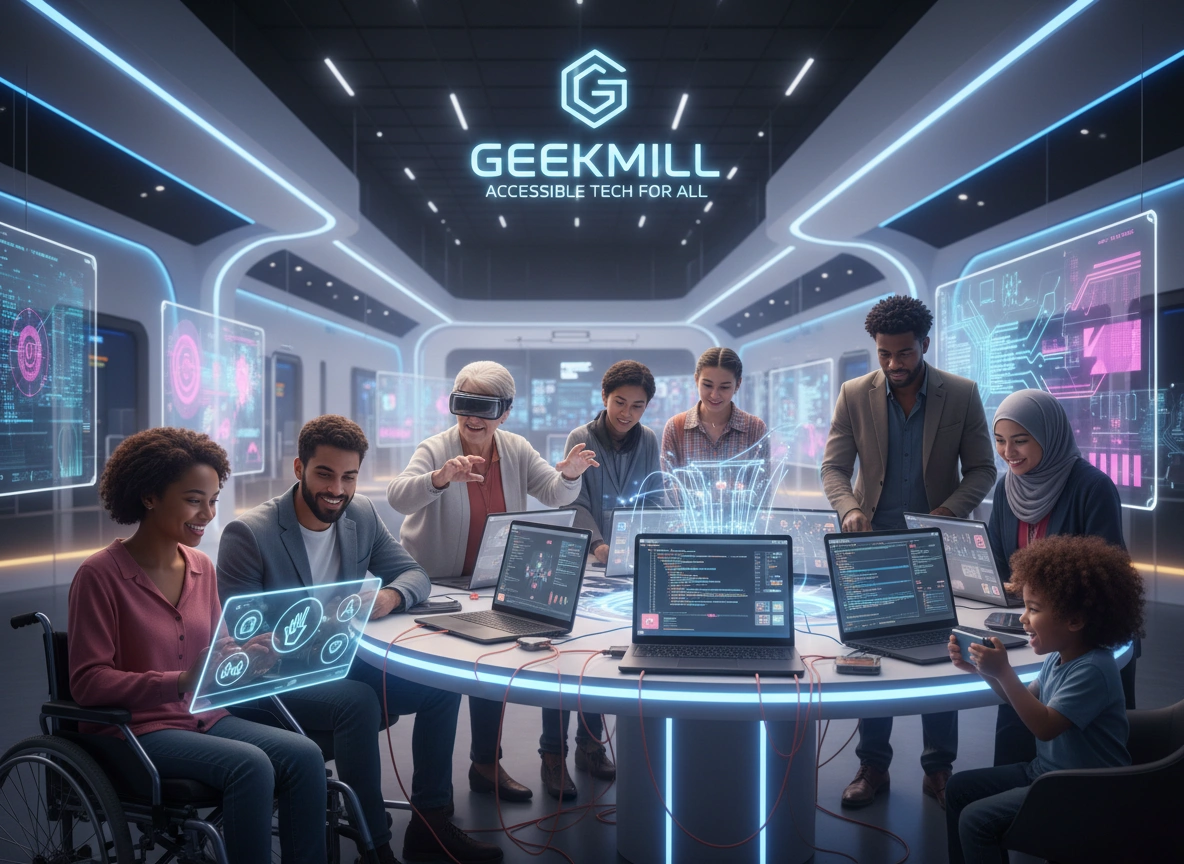
Technology should be a bridge, not a barrier. Yet, for millions of people around the world, the digital landscape remains a fortress of complexity and exclusivity. Geekmill has emerged as a formidable force challenging this status quo. By dismantling the traditional hurdles of cost, complexity, and specialized knowledge, they are redefining what it means to participate in the digital economy.
This article explores the specific strategies Geekmill employs to democratize technology. We will examine their core mission, break down their key initiatives, and look at the tangible impact they are having on communities and businesses that were previously left behind.
The Core Philosophy: Simplicity as a Right
At the heart of Geekmill’s operations lies a simple but radical philosophy: technological empowerment is a fundamental right. For too long, the tech industry has thrived on jargon and gatekeeping. “User-friendly” was often just a marketing term rather than a design principle. Geekmill flips this narrative by prioritizing intuitive design and open access above all else.
Their approach isn’t just about making things easier to use; it’s about making the underlying logic of technology understandable. When a user understands why a tool works, they are no longer dependent on a specialist to fix it. They become empowered creators rather than passive consumers. This shift in mindset is the foundation of Geekmill’s accessibility revolution.
Breaking Down the “Black Box”
Most modern technology operates as a “black box”—inputs go in, magic happens, and outputs come out. If the magic breaks, the user is helpless. Geekmill’s educational initiatives focus on opening this black box. Through their “Tech Transparency” coding standards, they encourage open-source development practices that allow users to peek under the hood.
This doesn’t mean everyone needs to be a master coder. It means the pathways to learning are clear, labeled, and free of the intimidating obfuscation that plagues enterprise software. By advocating for clean code and transparent algorithms, Geekmill ensures that curiosity is rewarded, not stifled.
Hardware Initiatives: Bridging the Digital Divide
Software is useless without the hardware to run it. One of the most significant barriers to tech accessibility is the sheer cost of devices. High-performance computing has historically been reserved for those with deep pockets, creating a digital divide that mirrors economic inequality.
Geekmill addresses this through their “Refresh and Redistribute” program. This circular economy initiative partners with major corporations to refurbish enterprise-grade hardware that is being cycled out. Instead of ending up in a landfill, these devices are rigorously tested, upgraded with lightweight, open-source operating systems, and distributed to underserved communities at a fraction of the market cost.
The “Mill-PC” Project
A standout example of their hardware innovation is the “Mill-PC.” Recognizing that not every task requires a $2,000 laptop, Geekmill designed a modular, low-cost computing unit based on single-board computer architecture.
The Mill-PC is designed to be:
- Affordable: Costing less than $100.
- Repairable: Built with standard parts that can be easily swapped out by a novice.
- Scalable: capable of handling basic coding, web browsing, and office tasks, but expandable for more complex needs.
By flooding schools and community centers with Mill-PCs, Geekmill ensures that students in underfunded districts have the same access to digital tools as their peers in affluent areas.
Software for the Non-Technical
While hardware provides the access, software provides the utility. Geekmill’s software division focuses on “No-Code” and “Low-Code” platforms that democratize app development.
In the past, building a custom application for a small business required hiring expensive developers or spending months learning a programming language. Geekmill’s “Builder Suite” changes this equation. It uses a visual interface that allows users to drag and drop functional blocks to create complex workflows.
Empowering Small Business Owners
Consider a local bakery that needs a specialized inventory system to track gluten-free ingredients. Standard enterprise resource planning (ERP) software is too expensive and complex. With Geekmill’s Builder Suite, the bakery owner can construct a custom inventory app in an afternoon.
This accessibility has profound economic implications. It allows small businesses to digitize their operations without the crippling overhead of custom software development. It levels the playing field, allowing a mom-and-pop shop to operate with the same digital efficiency as a large chain.
Education: The Geekmill Academy
Tools are only as good as the people who use them. Recognizing this, Geekmill has invested heavily in education through the Geekmill Academy. This isn’t your typical online course repository. It is a community-driven learning hub designed to accommodate diverse learning styles and accessibility needs.
Inclusive Curriculum Design
The Academy’s curriculum is built with neurodiversity in mind. Lessons are presented in multiple formats—text, video, interactive code blocks, and audio—to ensure that users with dyslexia, ADHD, or visual impairments can engage fully with the material.
Furthermore, Geekmill has partnered with localization experts to translate their core curriculum into over 40 languages. This breaks down the language barrier that often prevents non-English speakers from entering the tech workforce. By providing high-quality technical education in native languages, they are unlocking a massive reservoir of global talent.
Mentorship and Community Support
Self-paced learning can be isolating. To combat this, Geekmill facilitates a global mentorship program. Experienced professionals volunteer their time to guide newcomers through complex topics. This human element is crucial. It transforms a cold, technical learning process into a supportive community experience.
For women and minorities who are often underrepresented in tech, seeing mentors who look like them and share their experiences is incredibly validating. It sends a powerful message: “You belong here.”
Accessibility for People with Disabilities
True accessibility means designing for users with disabilities from day one, not as an afterthought. Geekmill’s “Access First” design policy mandates that all their products meet the highest standards of digital accessibility (WCAG AAA compliance).
Innovations in Assistive Tech
Beyond compliance, Geekmill actively develops assistive technologies. Their open-source screen reader project, “MillVoice,” is a lightweight, highly customizable tool that runs on minimal hardware. Unlike expensive proprietary screen readers, MillVoice is free and open to community modification.
They have also pioneered adaptive input devices for their Mill-PC line. These include customizable macro pads and eye-tracking integration support, allowing users with limited mobility to control their digital environment effectively. By treating assistive tech as a core feature rather than a niche add-on, Geekmill ensures that disability does not equate to digital exclusion.
The Impact on Communities
The ripple effects of Geekmill’s work are visible in communities across the globe. In rural areas where internet connectivity is spotty, Geekmill’s offline-first software architecture allows users to work without a constant connection and sync their data when they reach a hotspot. This feature alone has revolutionized how remote clinics and agricultural cooperatives manage their data.
In urban centers, their community tech hubs provide safe spaces for youth to explore robotics and coding. These hubs often serve as pipelines to employment, connecting talented individuals from non-traditional backgrounds with tech companies hungry for diverse perspectives.
Case Study: The “Green Tech” Initiative
Recently, Geekmill partnered with agricultural communities to deploy IoT (Internet of Things) sensors. Farmers used the Mill-PC and simple sensors to monitor soil moisture and automate irrigation.
The result was a drastic reduction in water usage and increased crop yields. Because the system was built on Geekmill’s open platform, the farmers could repair and modify the sensors themselves without relying on expensive vendor support contracts. This is a prime example of how accessible tech leads to sustainable, localized solutions.
The Future of Inclusive Tech
Geekmill is not just a company; it is a movement. They are proving that profitability and inclusivity are not mutually exclusive. By expanding the market to include those who were previously ignored, they have built a loyal and diverse user base.
As we look to the future, the integration of Artificial Intelligence presents new challenges for accessibility. There is a risk that AI will become another black box, accessible only to a select few. Geekmill is already ahead of the curve, developing “Explainable AI” tools that help everyday users understand how algorithms make decisions.
Their work serves as a blueprint for the rest of the industry. It demonstrates that when you lower the barriers to entry, you don’t lower the quality of the output—you raise the potential of the entire population.
Conclusion
Geekmill is dismantling the digital divide one device, one line of code, and one student at a time. By focusing on affordability, education, and inclusive design, they are making technology accessible to everyone, regardless of their economic status, physical ability, or geographic location.
The impact of their work goes beyond gadgets and software. It is about agency. It is about giving people the tools they need to shape their own futures. In a world that is increasingly digital, Geekmill ensures that no one is left offline.
Key Takeaways
- Affordability Matters: Low-cost hardware like the Mill-PC is essential for closing the gap.
- Simplicity empowers: No-code tools allow non-technical users to build business solutions.
- Design for All: Accessibility for disabilities must be a core design principle, not an add-on.
- Education is Key: Providing learning resources in multiple languages and formats unlocks global talent.
If you are a business leader, an educator, or a developer, look to Geekmill’s model. Ask yourself how you can remove friction for your users. The future of tech isn’t about building higher walls; it’s about building longer tables.
Please click here for more info.

