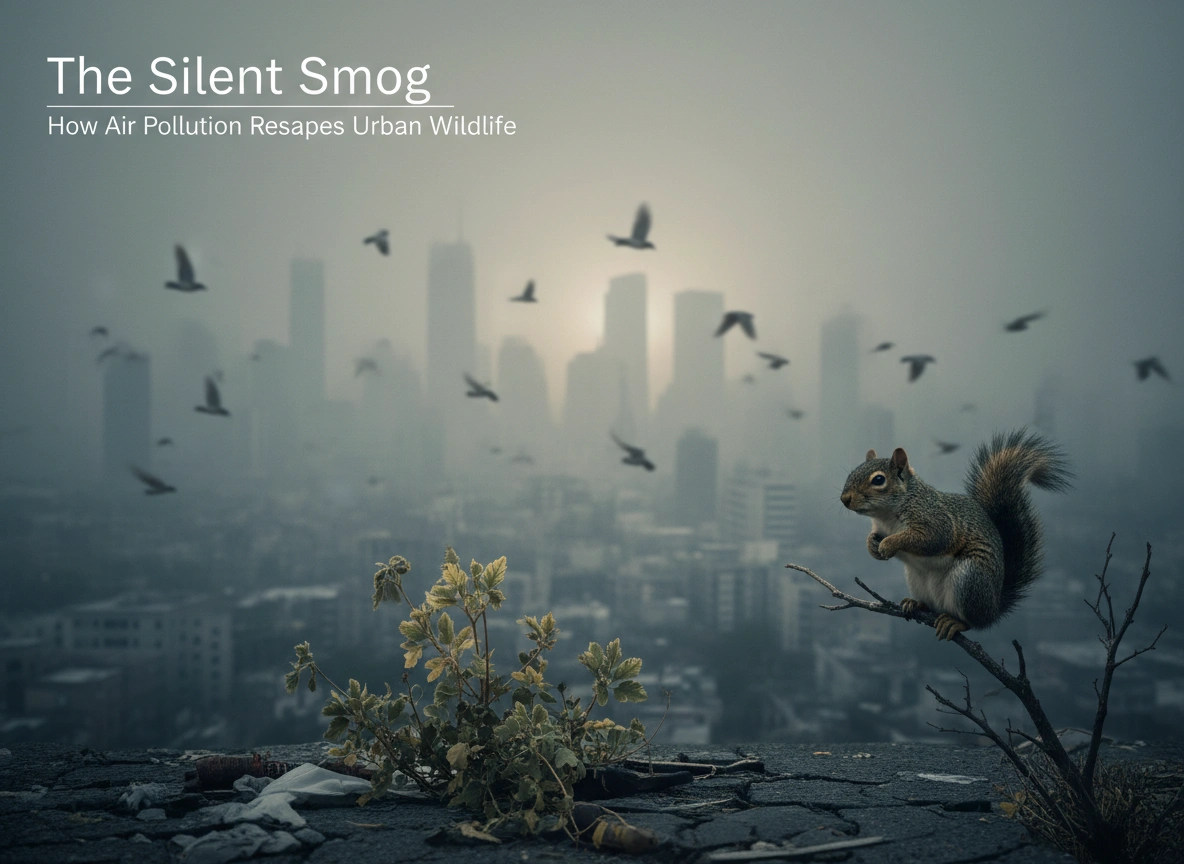
When we picture a city skyline choked with smog, we often worry about our own lungs. We think of asthma, cardiovascular risks, and the long-term health of our children. Yet, amidst the concrete canyons and busy intersections, we are not the only residents breathing in these toxic fumes. Urban wildlife—the pigeons on our sills, the squirrels in our parks, the bees in our gardens, and the fish in our canals—are facing a similar, often overlooked crisis.
While cities provide unique niches for adaptable species, the chemical makeup of urban air is emerging as a significant evolutionary pressure. The impact of air pollution on urban wildlife is profound, affecting everything from basic physiology to complex behavioral patterns, threatening the delicate ecological balance that even a concrete jungle relies upon.
The Invisible Cloud: Sources and Pollutants
To understand the impact on wildlife, we must first identify what they are breathing. Urban air pollution is a complex cocktail of gases and particulate matter (PM). The primary sources are well known: vehicular exhaust, industrial emissions, construction dust, and residential heating. However, for a small bird or a ground-dwelling insect, the concentration and proximity to these sources are far more intense than for the average human pedestrian.
The key antagonists in this narrative include:
- Particulate Matter (PM2.5 and PM10): Microscopic particles that can penetrate deep into respiratory systems.
- Nitrogen Oxides (NOx): Primarily from vehicle exhaust, these gases irritate respiratory tracts and contribute to smog.
- Ground-level Ozone (O3): Formed by chemical reactions between oxides of nitrogen and volatile organic compounds (VOCs) in sunlight.
- Heavy Metals: Lead, mercury, and cadmium often adhere to particulate matter, accumulating in soil and water.
For a creature with a high metabolic rate, like a sparrow, the intake of these pollutants relative to body size is staggering.
Avian Residents: The Canaries in the Coal Mine
Birds are perhaps the most visible victims of urban air pollution. Their highly efficient respiratory systems, designed for the rigorous demands of flight, make them exceptionally vulnerable to airborne toxins.
Physiological Stress and Respiratory Damage
Research has shown that urban birds often have blackened lungs, similar to the lungs of heavy smokers. Studies on House Sparrows and Great Tits in heavily polluted cities reveal oxidative stress—an imbalance between free radicals and antioxidants in the body. This stress damages DNA and accelerates cellular aging. The accumulation of particulate matter in avian lungs leads to inflammation, reducing their capacity for oxygen exchange, which is critical for flight and evasion of predators.
Reproductive Failure
Pollution does not just hurt the individual; it threatens the next generation. Heavy metals and acidic compounds from the air can degrade the quality of eggshells, making them thinner and more prone to breaking. Furthermore, pollutants like mercury can act as endocrine disruptors, altering hormonal balances necessary for successful mating and chick-rearing. In some highly polluted zones, clutch sizes are smaller, and hatchling survival rates drop significantly.
Altered Song and Communication
Behavioral changes are also evident. Birds rely on vocalizations for territory defense and mating. However, in noisy, smog-filled environments, clarity is lost. But beyond noise, pollution itself may play a role. Respiratory distress impacts a bird’s ability to sing complex songs. If a male cannot sing effectively due to lung inflammation, his chances of finding a mate decrease, altering the genetic flow of the population.
Mammals: From Squirrels to Foxes
Small mammals in urban environments live closer to the ground, where heavy pollutants often settle. Their exposure is twofold: inhalation and the ingestion of contaminated vegetation or soil.
Neurological Impairment
Recent studies on urban rodents and even domestic dogs living in polluted cities have shown hallmarks of neuroinflammation. The blood-brain barrier, which protects the brain from harmful substances, can be compromised by ultrafine particles. In wild mice populations, this has been linked to cognitive deficits. For a prey animal, a split-second delay in processing a threat due to cognitive impairment can be fatal.
Immunosuppression
Chronic exposure to polluted air weakens the immune system. Urban mammals often carry higher loads of parasites and are more susceptible to diseases like mange or viral infections compared to their rural counterparts. The energy required to detoxify their bodies leaves fewer resources for fighting off infection.
The Insect World: A Pollinator’s Plight
Insects are often ignored in discussions about pollution, yet they are foundational to urban ecosystems.
Disrupted Scent Trails
For insects, the world is a landscape of smells. Bees and butterflies rely on floral scents to locate food. Ozone and diesel exhaust react chemically with these floral scent molecules, effectively destroying the “smell” of the flower. This chemical confusion means pollinators travel longer distances to find food, expending precious energy, and often failing to pollinate urban gardens and green spaces effectively.
Physical Degradation
Particulate matter can physically adhere to the bodies of insects. For bees, dust and soot can clog the spiracles (breathing openings) and coat their sensory antennas, blinding them to their environment. This physical burden reduces foraging efficiency and colony health.
Aquatic Life: The Fallout Reaches the Water
Air pollution does not stay in the air. Through atmospheric deposition—rain and gravity—pollutants settle into urban waterways, canals, and ponds.
Acidification and Toxicity
Nitrogen and sulfur compounds from the air contribute to the acidification of urban water bodies. This shift in pH can be devastating for amphibian larvae and fish eggs, which require specific chemical balances to develop. Furthermore, heavy metals settling from the air accumulate in the sediment. Bottom-feeders ingest these toxins, which then bioaccumulate up the food chain to predatory fish and birds like herons.
Ecological Cascades: The Broader Picture
The impact of air pollution is rarely isolated to a single species. It triggers ecological cascades. If pollution reduces the population of predatory insects like ladybugs (which are sensitive to particulate matter), populations of pests like aphids may explode, damaging urban flora. If birds of prey decline due to bioaccumulation of toxins, rodent populations may surge unmanaged.
We are witnessing a forced evolution. Urban wildlife is under intense selection pressure. Only those individuals with robust detoxification systems or higher tolerance for oxidative stress survive. This reduces genetic diversity, making populations less resilient to other threats like climate change or disease outbreaks.
Mitigation and Hope: Clearing the Air
Recognizing the severity of the issue is the first step toward mitigation. Protecting urban wildlife from air pollution requires a multi-pronged approach that benefits human residents just as much as our animal neighbors.
Green Infrastructure
Planting specific types of vegetation can help filter air. “Green walls” and dense hedgerows act as barriers, trapping particulate matter before it reaches nesting sites or parks. Coniferous trees are particularly effective at capturing PM throughout the year. Increasing the biodiversity of urban flora provides cleaner micro-habitats for insects and birds.
Traffic Reduction Zones
Implementing low-emission zones and reducing vehicular traffic in key wildlife corridors can significantly lower local pollution levels. Urban planning must consider “wildlife commuting routes”—connecting parks with green corridors that are set back from major roadways.
Reducing Light and Noise
While distinct from chemical pollution, light and noise pollution often accompany it. Reducing these stressors allows wildlife to allocate more energy to physiological repair and detoxification.
Monitoring and Research
We need more dedicated research on urban wildlife toxicology. Using species like pigeons or honeybees as “bio-monitors” can help us map pollution hotspots more effectively than static sensors. Their health provides a real-time readout of the biological cost of our air quality.
Conclusion
The city is an ecosystem, however artificial it may seem. The creatures that share our streets and skies are resilient, but they are not invincible. The impact of air pollution on urban wildlife is a silent crisis of physiological stress, reproductive failure, and behavioral confusion.
By addressing air quality, we are not just saving ourselves from respiratory disease; we are preserving the intricate web of life that brings song, color, and balance to our concrete world. A city with air clean enough for a sparrow to thrive is a city that is healthier for us all. The plight of the urban animal is a mirror, reflecting the invisible burdens of our modern environment, and it is time we cleared the air.Please visit website for more info.
You may also read: Understanding the Role of Nutrition in Parenting Success

