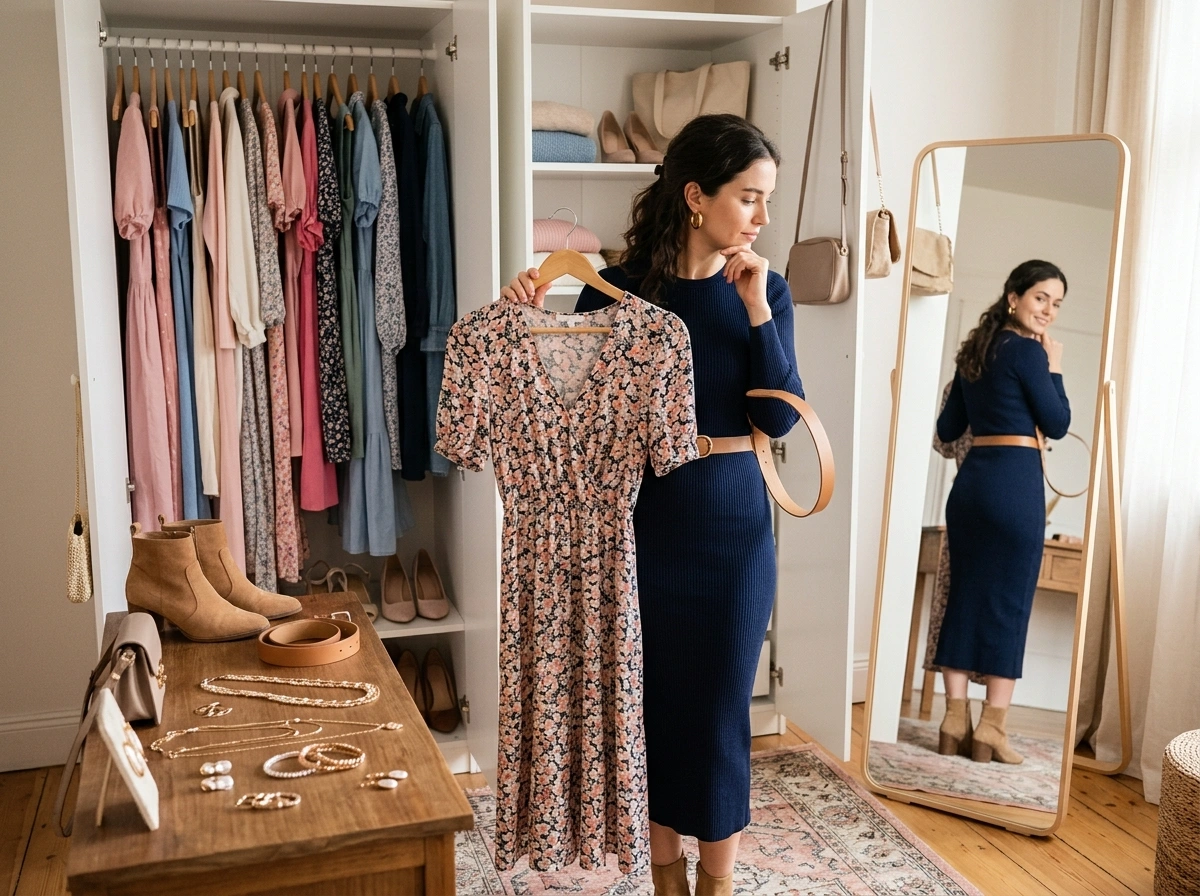
A dress can be the easiest outfit in your closet or the most confusing. Slip one on, and you’re ready to go, right? Not always. The truth is, a beautiful dress can fall flat if it isn’t styled with care. Small choices, from the shoes you pick to the way a hem sits, can shift your entire look.
The good news is that most styling missteps are easy to fix once you know what to watch for. Below, we break down the most common mistakes women make when styling dresses, along with practical tips to help you look put-together for any occasion.
1. Wearing the Wrong Undergarments
What you wear underneath matters just as much as the dress itself. The wrong bra, visible panty lines, or shapewear that pinches can ruin an otherwise flawless outfit. A strapless dress paired with regular bra straps peeking out is a look nobody is going for.
How to avoid it: Build a small collection of versatile undergarments. Keep a strapless bra, a nude seamless set, and well-fitting shapewear on hand. Match the color of your undergarments to your skin tone rather than your dress for the most invisible finish. Before heading out, check yourself in a full-length mirror under good lighting.
2. Ignoring Your Body Proportions
One of the biggest mistakes is chasing trends without thinking about your own shape. A silhouette that looks stunning on a friend may not do the same for you. Dressing well is less about hiding your body and more about highlighting your best features.
How to avoid it: Learn what balances your frame. An empire waist can flatter a fuller midsection, while a fit-and-flare style adds curves to a straighter shape. A wrap dress works beautifully for many body types because it defines the waist. Focus on what makes you feel confident, not just what’s popular.
3. Choosing the Wrong Fit
A dress that’s too tight tugs in all the wrong places, while one that’s too loose can swallow your figure. Both extremes make you look less polished. Fit is the foundation of a great outfit, and getting it right instantly elevates your appearance.
How to avoid it: Always try before you buy when possible. Sit down, raise your arms, and walk a few steps to test comfort and movement. If a dress fits perfectly everywhere except one area, remember that small adjustments are usually possible.
4. Misjudging Dress Length for the Occasion
Length sends a message. A mini dress at a formal dinner or a floor-length gown at a casual brunch can feel out of place. Getting the length right shows you understand the setting and respect the moment.
How to avoid it: Match hemlines to the event. Knee-length and midi styles work well for offices, daytime events, and semi-formal gatherings. Save minis for casual outings and long gowns for black-tie occasions. When in doubt, a midi length is a safe and elegant choice.
5. Clashing Patterns and Colors
Mixing bold prints or pairing colors that fight each other can overwhelm a look. While experimenting is fun, too much visual noise pulls attention away from you and toward the chaos of your outfit.
How to avoid it: Stick to one statement piece and keep the rest simple. If your dress features a busy print, choose accessories in neutral or solid tones. When combining colors, lean on complementary shades or stay within the same color family for a cohesive feel. A little restraint goes a long way.
6. Over-Accessorizing
Accessories should enhance your dress, not compete with it. Piling on chunky necklaces, stacked bracelets, oversized earrings, and a bold belt all at once creates clutter. The eye doesn’t know where to land.
How to avoid it: Follow the classic rule of picking one focal point. If you wear statement earrings, keep your necklace minimal or skip it entirely. Let the dress lead, and use accessories to add polish rather than distraction. Sometimes a single delicate piece is all you need.
7. Neglecting Proper Footwear
Shoes can make or break your outfit. Wearing worn-out sneakers with an elegant dress or towering heels with a casual sundress creates a mismatch that throws off your whole look. Footwear ties everything together.
How to avoid it: Think about both style and comfort. Pair flowing dresses with sandals or wedges, and sleek dresses with heels or pointed flats. For long events, choose footwear you can actually walk in. Coordinate the formality of your shoes with the formality of your dress.
8. Ignoring the Dress Code
Showing up underdressed or overdressed can leave you feeling out of place. Dress codes exist for a reason, and ignoring them signals that you missed the memo, literally.
How to avoid it: Read invitations carefully and ask the host if you’re unsure. Learn the basics: cocktail attire calls for a shorter, dressy option, while business casual leans toward polished but relaxed. When you can’t decide, dressing slightly up is usually safer than dressing down.
9. Skipping Tailoring
Off-the-rack dresses are made for average measurements, and few of us fit that mold exactly. A gaping bust, a hem that’s too long, or sleeves that bunch can make even an expensive dress look cheap. Tailoring is the secret weapon of well-dressed women.
How to avoid it: Find a trusted tailor and use them. Simple fixes like hemming, taking in the waist, or adjusting straps cost little but transform the fit. A modestly priced dress that fits perfectly will always look better than a designer piece that doesn’t.
10. Improper Layering
Layering adds warmth and dimension, but doing it wrong can bury your dress or create bulk. A heavy cardigan over a delicate slip dress, for example, can flatten your silhouette and hide the very outfit you chose.
How to avoid it: Choose layers that complement the weight and cut of your dress. A tailored blazer sharpens a sheath dress, while a light denim jacket softens a floral one. Keep proportions balanced, and make sure each layer serves a purpose rather than adding clutter.
Bonus Tip: Forgetting to Consider the Fabric
Fabric affects how a dress moves, breathes, and holds its shape. A stiff material may not drape the way you hoped, and a clingy fabric can highlight areas you’d rather downplay.
How to avoid it: Pay attention to fabric when shopping. Structured materials hold their form for polished settings, while soft, flowing fabrics suit relaxed occasions. Choose breathable options for warm weather to stay comfortable all day.
Conclusion
Styling a dress well comes down to attention to detail. From the undergarments you can’t see to the shoes everyone notices, each choice shapes the final impression you make. The mistakes above are common, but they’re also easy to correct once you know what to look for.
Start by focusing on fit and proportion, then layer in thoughtful accessories, the right footwear, and occasion-appropriate choices. Invest in a good tailor and take a moment to check yourself in the mirror before heading out. With these habits, you’ll turn every dress in your closet into a confident, polished look that feels entirely your own.
Please visit website for more info.

